Le coin des étudiants : Shu


Apprendre une langue n’est jamais une mince affaire, mais c’est essentiel pour comprendre une autre culture. L’Alliance Française fait office de porte d’entrée pour tous ceux qui souhaitent non seulement maîtriser la langue de Molière, mais aussi découvrir les codes culturels de la France et de ses habitants. Dans ce blog, jetons un regard sur le parcours de Shu qui évoque avec nous ses souvenirs et ses motivations.


Learning a language is never an easy task, but it is an essential part of understanding another culture. The Alliance Française acts as a gateway for all those who wish not only to master the language of Molière, but also to discover the cultural codes of France and its people. In this blog, Shu will share with us her motivation and unforgettable memories in her learning journey

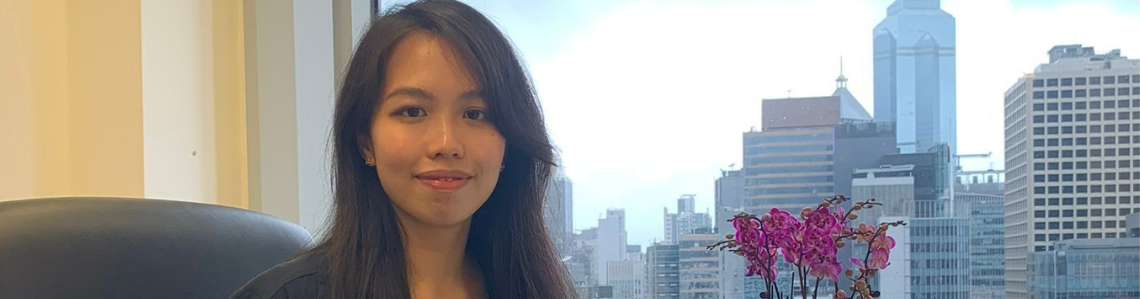
Bonjour ! Je m'appelle Shu !

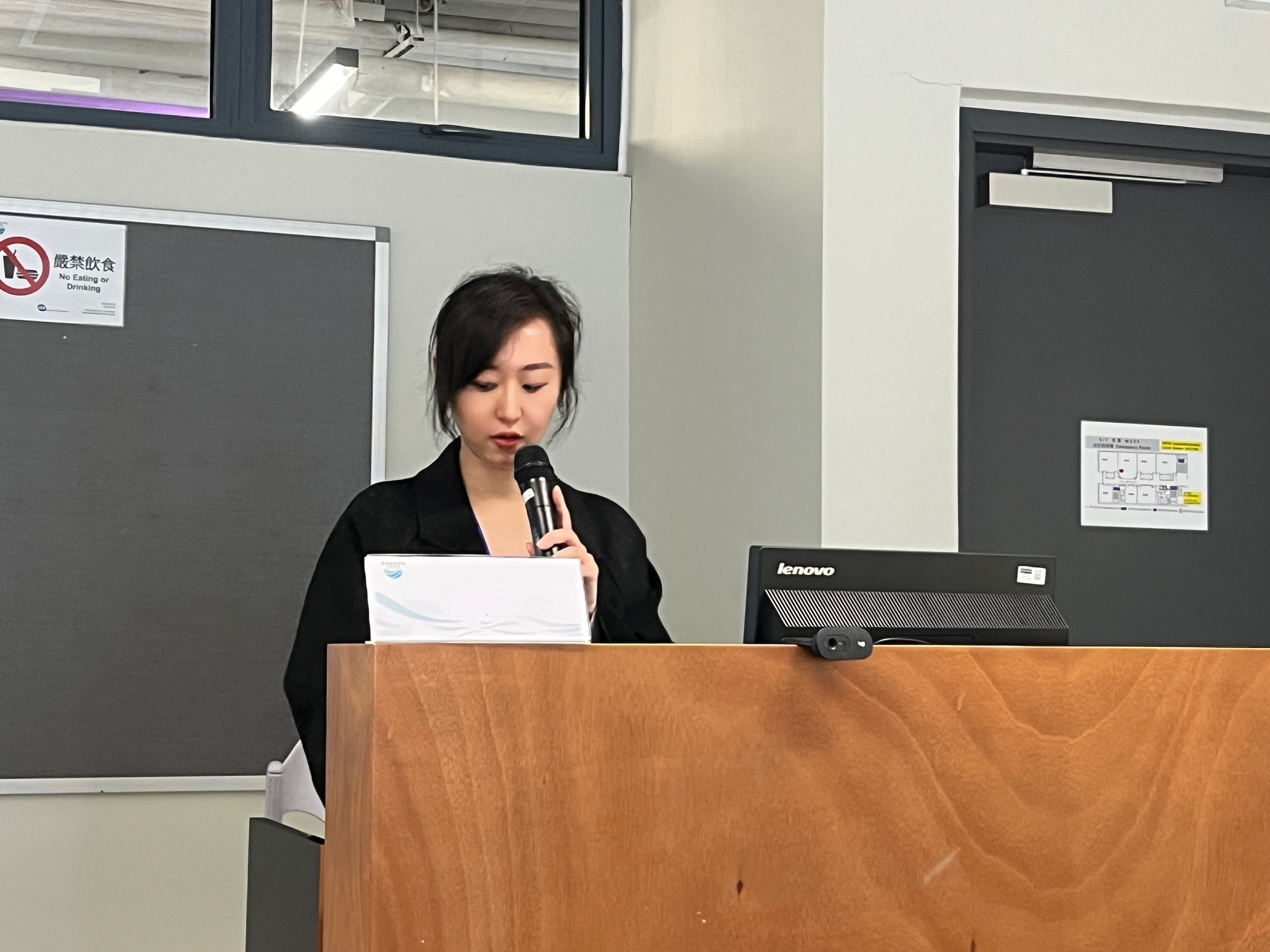
Shu presenting in academic conference

I am delighted to share my French learning journey. Je m'appelle Shu, and I am currently a PhD student at the University of Hong Kong, specializing in early Chinese excavated texts and Confucianism. 

Before coming to Hong Kong, I focused on ancient Chinese paleography during my master's studies and achieved scores above 90 (out of 100) in every course at a specialized research center. I later took the IELTS exam and obtained a C1 level, which enabled me to be admitted to HKU. 

I chose to come to Hong Kong in 2021, inspired by a 2020 interview with French professor Olivier Venture, who currently teaches at EPHE(École Pratique des Hautes Études). As a French sinologist, Professor Venture came to China in the 1990s to study ancient Chinese writing system and participated in various archaeological excavation and documentation projects in China. In the interview, he mentioned that he had read James G. Février' s Histoire de l'écriture, and that he had studied not only Chinese, but also Hittite, Mayan, and Ancient Egyptian Hieroglyphs. This broadened his understanding of the distinct characteristics of the Chinese writing system. 

Another book that influenced him was L'histoire et des méthodes, edited by Charles Samaran, which helped him combine insights from historical geography, historical linguistics, archaeology, and epigraphy to develop a multidisciplinary approach to paleographic studies. Professor Venture sincerely encouraged young Chinese scholars to learn more languages and to cultivate a multidisciplinary perspective.

After arriving in Hong Kong, I continued my academic work—attending classes, writing papers, and participating in conferences. In my spare time, I read How to Read Egyptian Hieroglyphs: A Step-by-Step Guide to Teach Yourself by Mark Collier and Bill Manley, along with several related papers, and gained a basic understanding of Egyptian hieroglyphs. Given my background in oracle bone and bronze inscriptions from early China, I immediately began drawing comparisons between these two writing systems.

For example, the use of multiple graphs to represent a single word in Egyptian bears similarities to the structure of early Chinese writing. Moreover, the way Egyptian inscriptions describe royal women—as “wife of X, daughter of Y, mother of Z”—closely resembles the way Western Zhou bronze inscriptions identify noble women through their clan and kinship ties.

As Jean-François Champollion, the founder of modern Egyptology, was a French paleographer, this naturally deepened my interest in French Egyptology, French culture, and the French language.

Driven by my admiration for Champollion, I also read a popular biography titled The Keys of Egypt: The Race to Read the Hieroglyphs, written by British archaeologists Lesley and Roy Adkins. The book describes how, despite Champollion's brilliant mind and personal dedication, he faced numerous obstacles: he had to navigate the complex relationship with his elder brother (who supported him financially), as well as with provincial officials such as Fourier and other political figures.

More importantly, at that time in France and Britain, several scholars were competing to decipher Egyptian hieroglyphs. When Champollion requested access to original materials from Thomas Young, this British scholar refused. Later, after Champollion successfully cracked the code, Young subtly implied in his own writings that Champollion did not acknowledge using his research.

As a young paleographer myself, I deeply understand the critical importance of access to primary materials in paleographic research. This made me feel great sympathy for Champollion and strong disapproval of Dr. Young's narrow-mindedness. I admire Champollion all the more for being able to achieve this historic breakthrough solely through his own intelligence and perseverance, despite facing such setbacks.
During my doctoral studies, I also came to appreciate the outstanding contributions of French sinologists to global sinology, including Édouard Chavannes, Paul Pelliot, Marcel Granet, Alain Thote, and of course, Professor Venture, whom I mentioned earlier. I am fully aware that English alone is not sufficient to truly access French culture and French sinological scholarship. I must reach C1 level or beyond in French, and given my background in theoretical linguistics and Chinese paleography, I am confident that I can achieve this goal in the coming years. 

Besides French, I have also studied introductory Latin and learned that French words like vous and nous are derived from the Latin pronouns vos and nos, and that words such as amour, lumière, and main have Latin roots. I have also self-studied some German, Russian, and Italian, and I am currently preparing to learn Ancient Greek. Studying these diverse writing systems has provided me with valuable perspectives that greatly enhance my understanding of French.

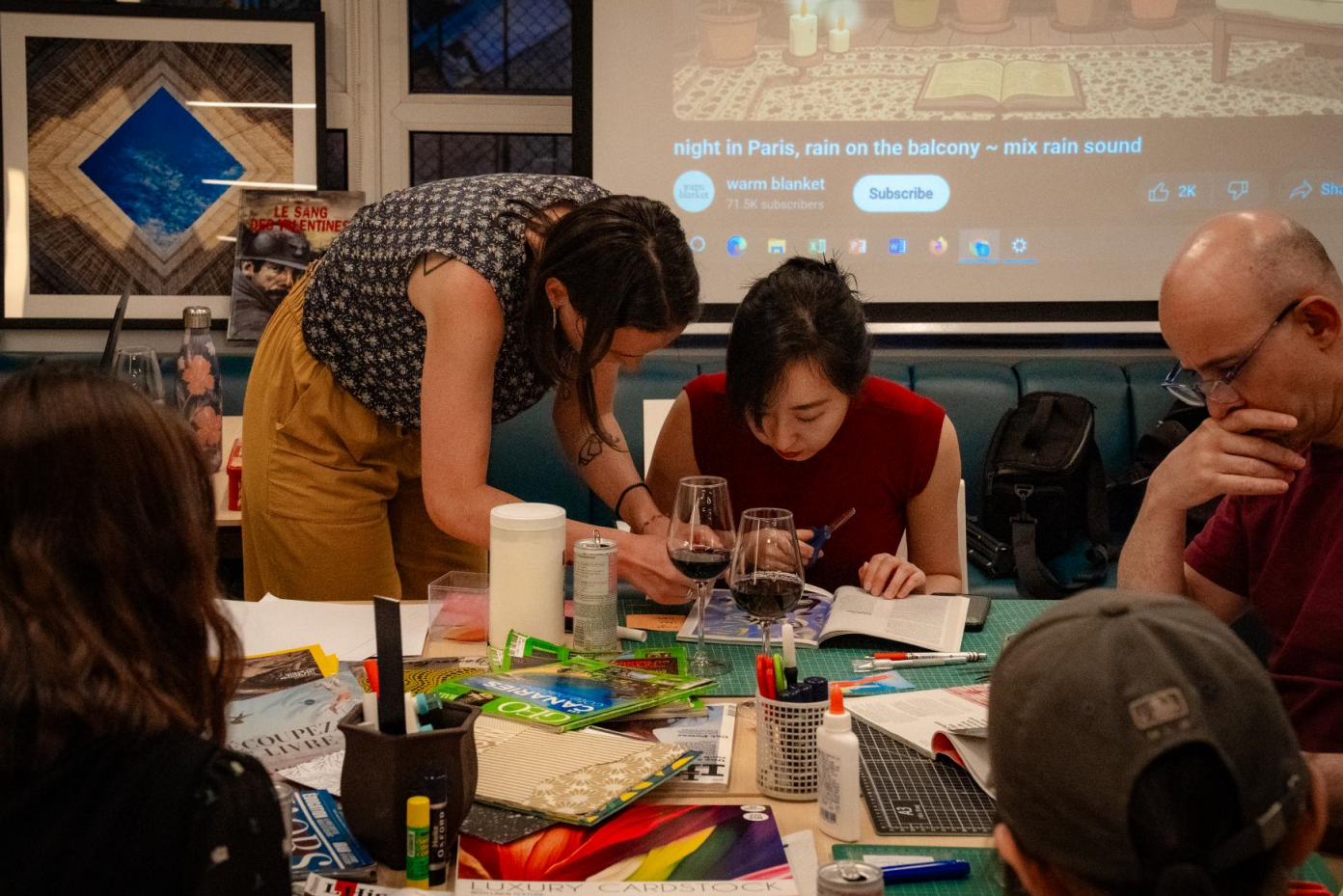
Shu participating in Alliance Française workshop

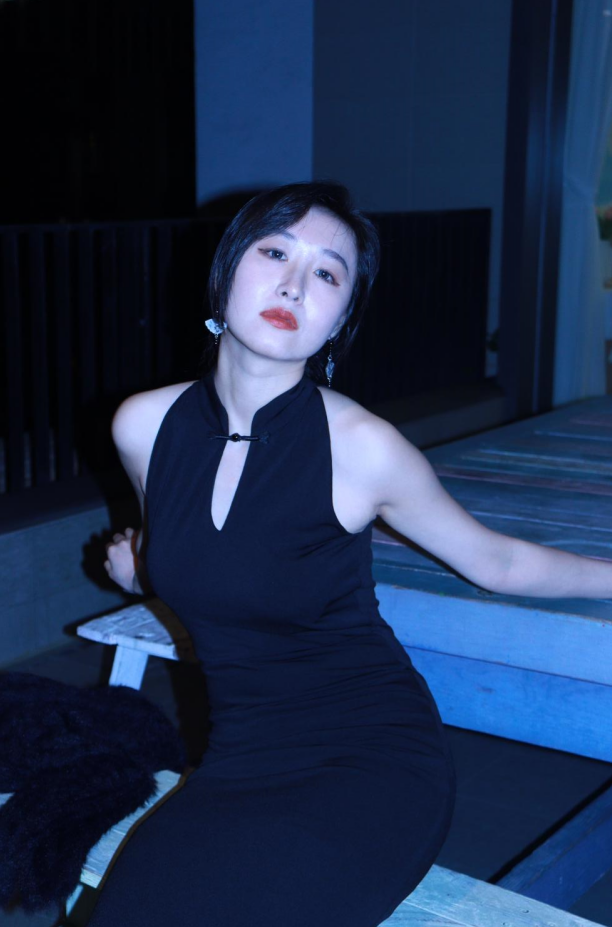
Shu learning French in Alliance Française

During my time at the Alliance Française, I have received enthusiastic and dedicated instruction from teachers Séverine and Nicolas. In particular, Nicolas has gone beyond the textbook to teach us deeper grammar rules and cultural insights, using a wide range of teaching methods to help each student in our small group grasp and appreciate the beauty of the French language. I often ask our teachers questions about pronunciation and grammar, and they always respond with great patience and kindness. The Alliance Française library also offers an impressive range of learning resources, a place where I could happily spend hours.

Finally, I would like to briefly explain why I insist on using my Chinese name “Shu” at the Alliance. The character “纾” in my name was inspired by 林纾 Lin Shu, a classical Chinese prose writer, painter, and translator. Lin Shu was the first Chinese to introduce French literature to China, and together with a collaborator, translated Alexandre Dumas fils' La Dame aux Camélias into Chinese. 

My father is a great admirer of French literature and loves characters such as Marguerite, Quasimodo, and Julien Sorel. He named me after Lin Shu. At the same time, from a very young age, he had private tutors teach me the Chinese classics. He hoped I would be rooted in China' s 5,000-year-old civilization, while also growing wings with Western (especially French) cultures, and become a bridge between Eastern and Western civilizations

If I one day reach a truly high level of French proficiency, I aspire to bring French culture and the achievements of French sinology to the Chinese-speaking and English-speaking worlds. This, I believe, is the vision my father had in mind when he gave me my name.

Shu


Leave a Comment / Laissez un commentaire

What did you think of this article? Qu'avez-vous pensé de ce texte?
First and Last Names
E-mail Address


Spread the love!